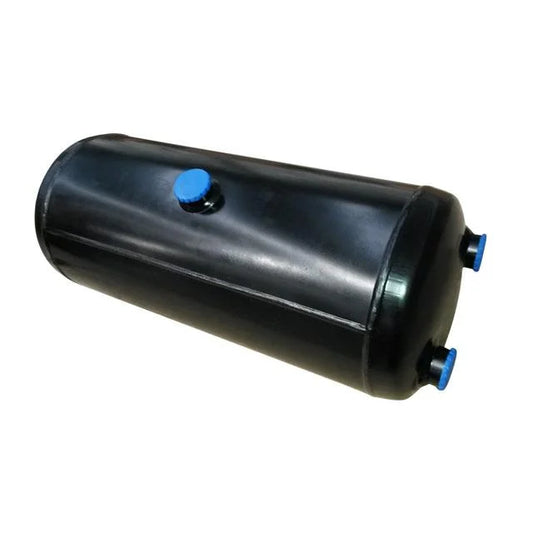
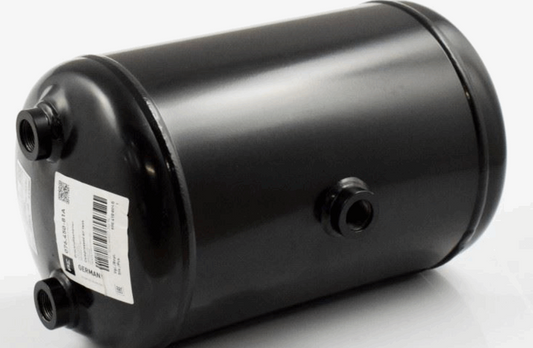
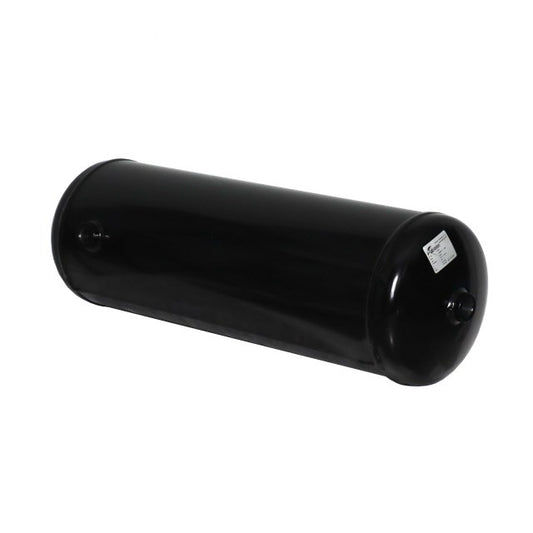
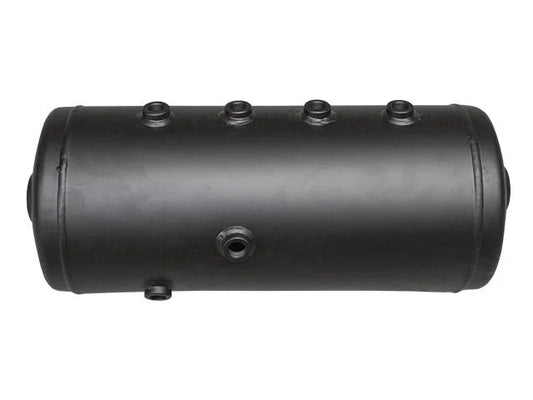
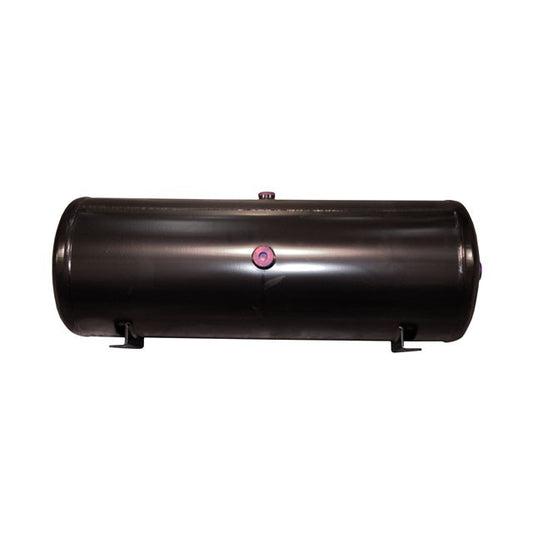
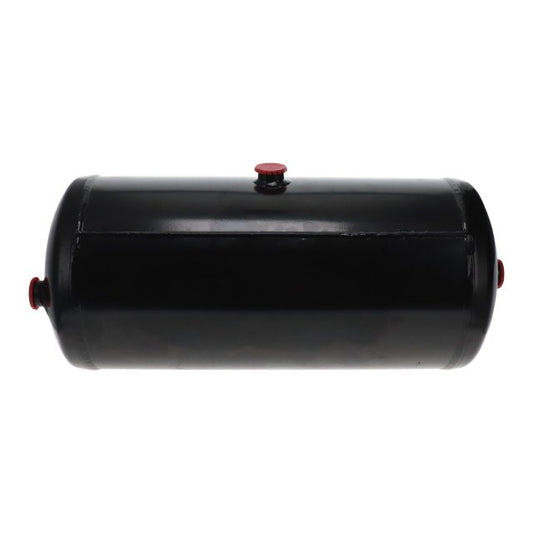
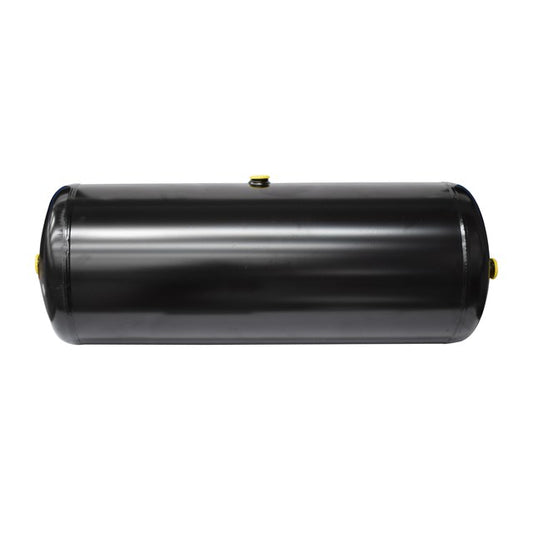
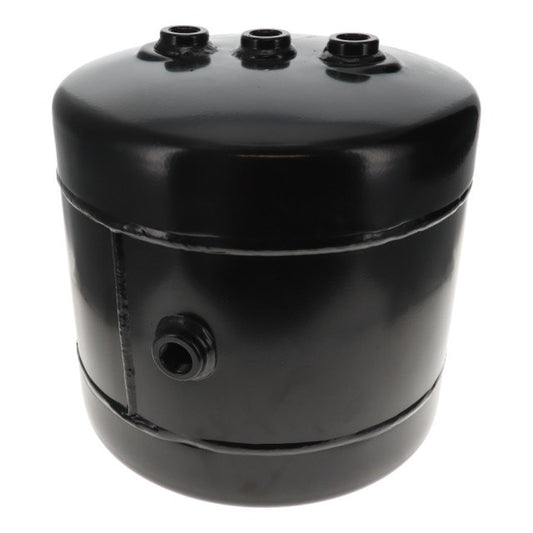
Choosing the right air tank for your HGV
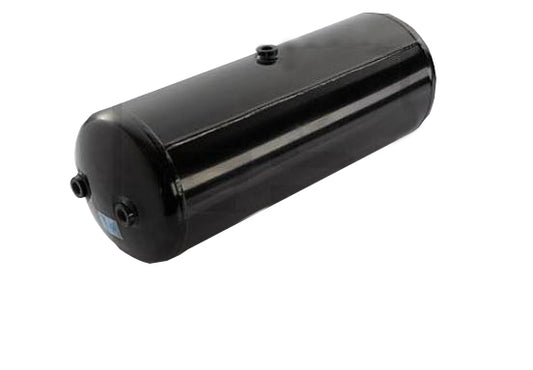
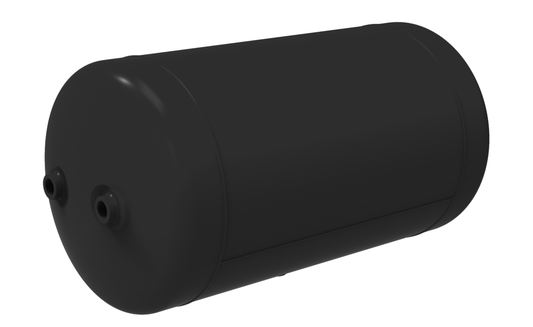
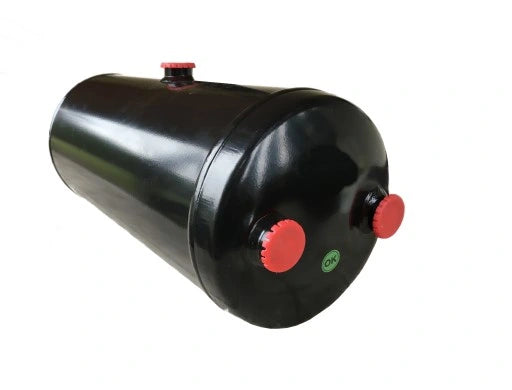
Air tanks, or air reservoirs, store compressed air generated by the compressor and make it available to the braking system, air suspension, and any ancillary air-operated equipment on the vehicle. On most HGVs there are multiple reservoirs in the system, each serving a specific circuit: service brakes, secondary brakes, park brake, and in some cases trailer supply.
Reservoir failure is usually caused by corrosion from the inside out. Condensation builds up in the tank over time, particularly on vehicles that don't drain moisture traps regularly. Once corrosion breaches the wall, the tank must be replaced rather than repaired. Signs of a failing reservoir include air loss at the tank body, reduced system pressure, and in some cases audible leaks around welds or fittings.
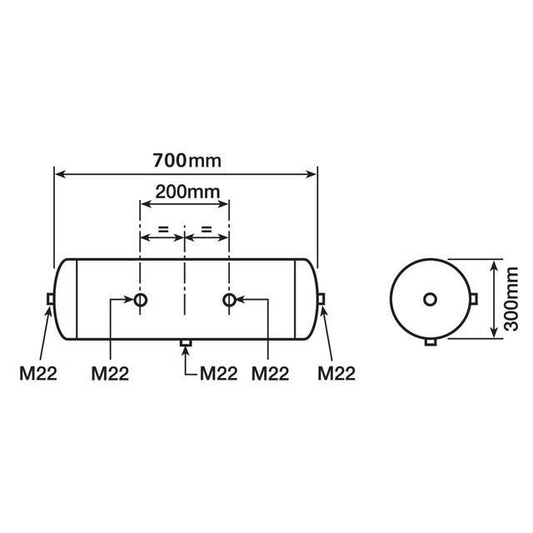
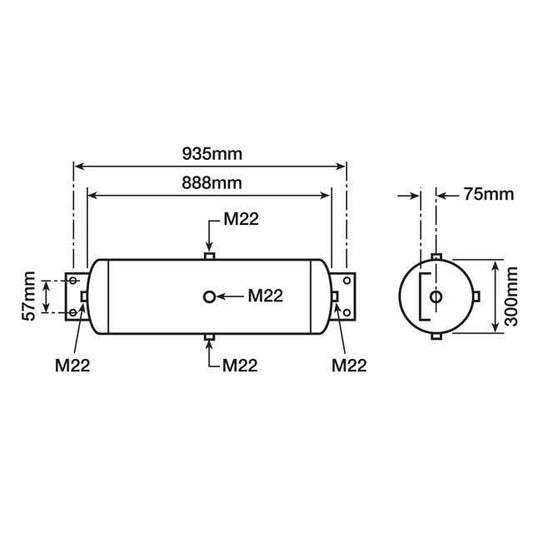
When ordering a replacement, confirm the capacity in litres, the port configuration, and the mounting bracket positions. Tanks are not universal across makes and models, and the port thread standard (BSP or metric) needs to match your existing fittings. If you're not certain which tank fits your chassis, call us on 01527 598 000 with the registration or VIN and we'll confirm before you order.
Frequently Asked Questions
What does an air tank do on an HGV?
The air tank stores compressed air from the vehicle's compressor and supplies it to the braking system, air suspension, and ancillary air-operated equipment. Most HGVs have multiple reservoirs, each dedicated to a specific circuit. Without adequate air pressure in the reservoirs, braking performance is compromised and the vehicle will trigger low-pressure warnings.
How do I know if my HGV air tank needs replacing?
The most common indicators are visible corrosion on the tank body, air leaks around welds or fittings, or a persistent drop in system pressure that isn't explained by a compressor or valve fault. Tanks with heavy internal corrosion should be replaced rather than patched. A diagnostic scan won't always flag a leaking reservoir directly, so a physical inspection under the chassis is often the most reliable check.
Can I replace just one air tank or do I need to replace them all?
You can replace individual reservoirs. Each circuit has its own tank, and they fail independently. Identify the specific reservoir at fault by pressure-testing each circuit, then replace the affected unit. If the vehicle is high-mileage and multiple tanks show signs of corrosion, replacing them together is more cost-effective than returning for each one.
What size air tank do I need for my truck?
Tank capacity is measured in litres and varies by chassis, circuit, and manufacturer specification. The replacement tank must match the original in capacity, port configuration, and mounting positions. The easiest way to confirm fitment is to cross-reference the OE part number stamped on the original tank, or call us with the chassis number and we'll identify the correct unit.