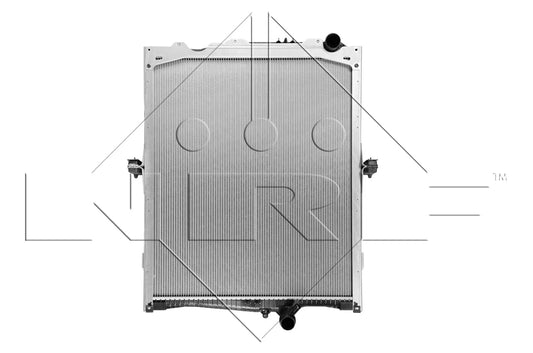
Truck engine cooling parts at Truckstop Group
Cooling system failures rarely happen without warning, but the warning signs are easy to miss if you are not looking for them. A fan clutch that slips under load, a radiator hose that has begun to delaminate internally, an expansion tank with a hairline crack around the filler neck — each of these will cause overheating before it causes visible failure. The cost of a cooling system component is a fraction of the cost of engine damage from sustained overheating.
Our truck engine cooling range covers all the key components: radiator fans and fan clutches for airflow management, coolant expansion tanks in vehicle-specific profiles, radiator hoses in upper and lower configurations, and water pump impellers for coolant circulation. Parts are sourced from DT Spare Parts, NRF, Nissens, Hella and Diesel Technic — manufacturers with specific commercial vehicle product ranges rather than generic automotive parts rebadged for trucks.
Cooling faults often present as clusters: a worn fan clutch reduces airflow, which raises coolant temperature, which stresses the expansion tank and hoses. Where one component is failing, inspecting the adjacent parts before completing the repair is worthwhile. See also our truck radiators collection for replacement radiator units. Call our team with your chassis number and fault symptoms for part recommendations.
Frequently asked questions
How do I know if a truck fan clutch is failing?
A slipping fan clutch typically causes the engine temperature to rise under load, particularly on climbs or in traffic. The fan may also spin freely when cold rather than engaging firmly. An audible change in fan noise under load — reduced roar where you would expect high engagement — is another sign. A failed clutch can cause the fan to run permanently at full speed, which increases fuel consumption and load on the engine.
What are the signs of a deteriorating radiator hose?
External hardening, surface cracking, swelling or damp patches around the clamps are the visible signs. Internal delamination — where the inner lining separates from the hose wall — is less visible but will restrict coolant flow. Hoses should be squeezed when cold: a hose that feels excessively stiff or collapses under pressure rather than springing back should be replaced.
When should a water pump impeller be replaced on an HGV?
Most manufacturers recommend impeller replacement at major service intervals or when there is evidence of reduced coolant flow, unexplained temperature rises or coolant contamination from impeller corrosion. Many operators replace the impeller whenever the thermostat or coolant is changed on high-mileage vehicles as a preventative measure.