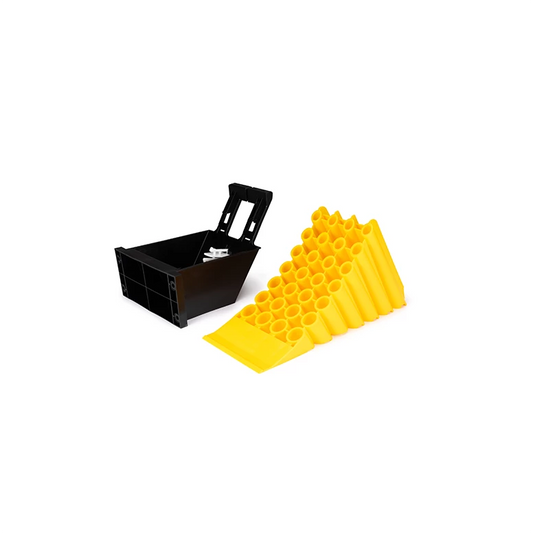
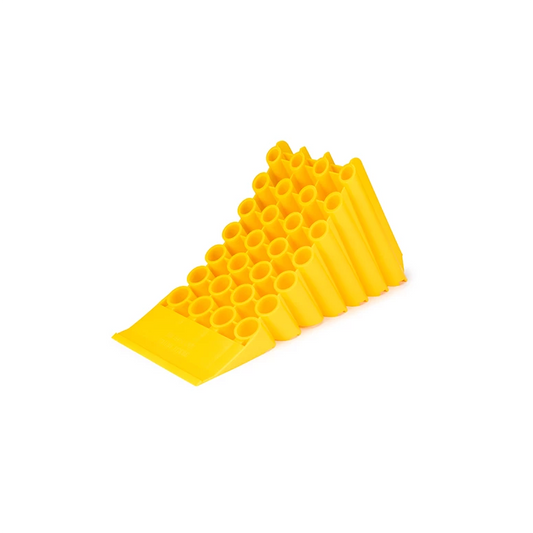
Wheel chocks for trucks, trailers and commercial vehicles
Wheel chocks are a basic but important piece of safety equipment in any commercial vehicle operation. They prevent vehicle movement when a truck or trailer is parked without air pressure maintaining the spring brakes, and are particularly important when working under or around a vehicle, during trailer uncoupling, and at loading bays where a vehicle might be moved unexpectedly. DVSA guidance and most site safety regulations require wheel chocks to be used when a vehicle is left unattended without a driver and during loading and unloading operations.
Rubber wheel chocks are the most common choice for general HGV use, offering good grip on both tarmac and concrete surfaces and sufficient weight to stay in place under the tyre. Heavy-duty steel or reinforced plastic chocks are preferred for wheel positions where a rubber chock might deform under load. For trailer use at loading docks, purpose-made dock chocks with a higher profile and wider base give better resistance to the wheel rolling over the chock during impact loading.
We stock wheel chocks in sizes suitable for HGV and trailer axle applications. UK nationwide delivery or same-day collection from our branches.
Frequently asked questions
What size wheel chocks do I need for HGV trucks?
HGV wheel chocks need to be large enough to make solid contact with the tyre profile and resist the weight and rolling force of the vehicle. A chock height of at least 150mm and a base length of 200-250mm is appropriate for most HGV tyre profiles. Check the chock's rated capacity matches the axle loading of the vehicle being chocked.
How many wheel chocks are needed for a parked trailer?
The minimum requirement is one chock on each side of one axle, which provides resistance in both forward and rearward movement. For trailers at a loading bay or on uneven ground, chocking two axles provides greater security. Company safety procedures and site rules may specify a higher minimum number of chocks.
Are rubber wheel chocks better than plastic for HGV use?
Rubber wheel chocks grip road surfaces better than plastic in wet conditions and do not crack in cold weather. They are the preferred choice for on-road and yard use. Heavy-duty plastic chocks are lighter and easier to handle for drivers who carry them in a cab toolbox. Steel chocks offer the highest load capacity but are heavier and can damage surfaces if dragged. For most HGV applications, rubber is the practical first choice.