Automotive relays and relay sockets for commercial vehicles
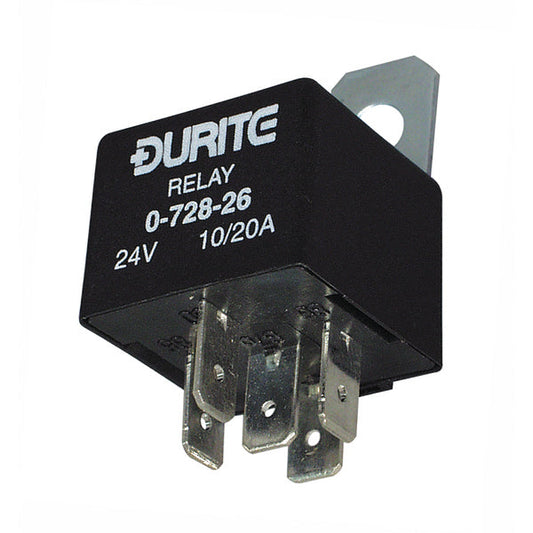
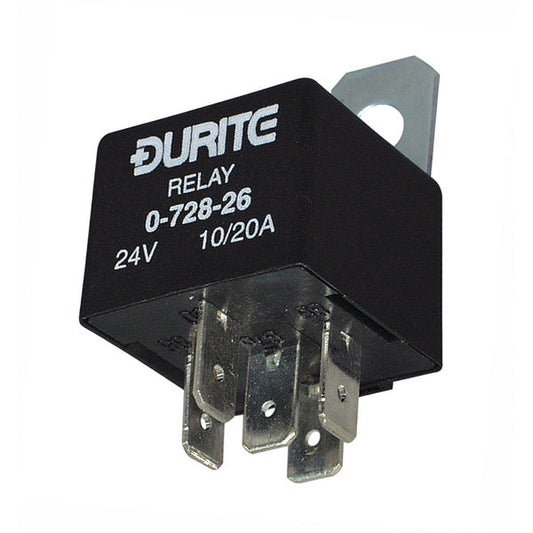
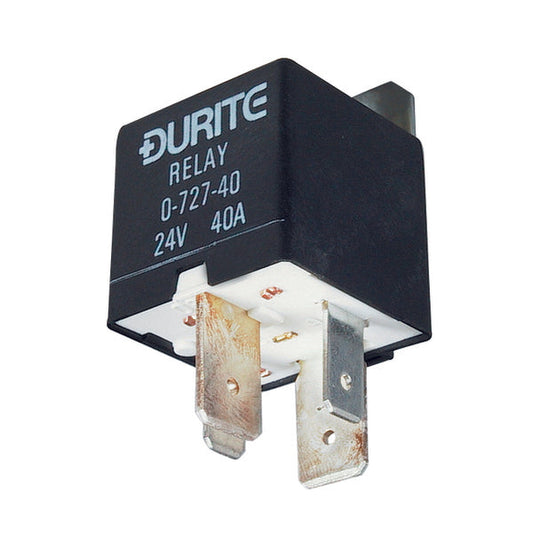
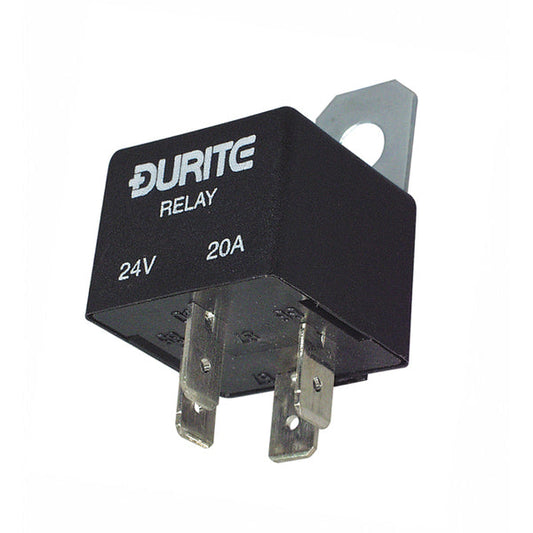
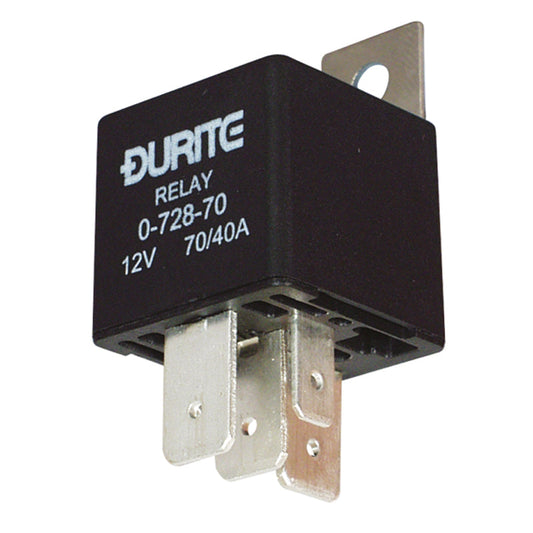
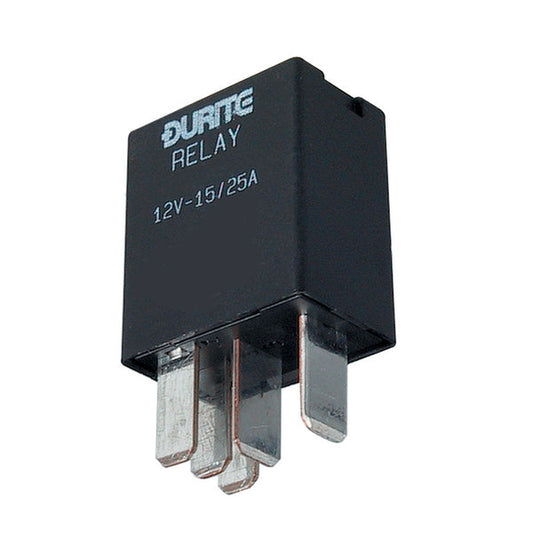
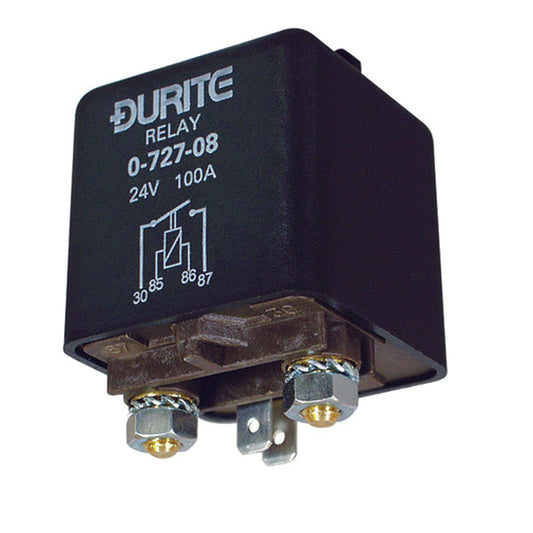
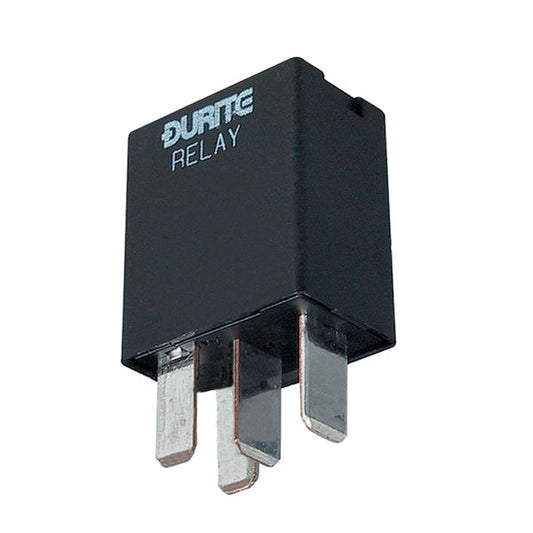
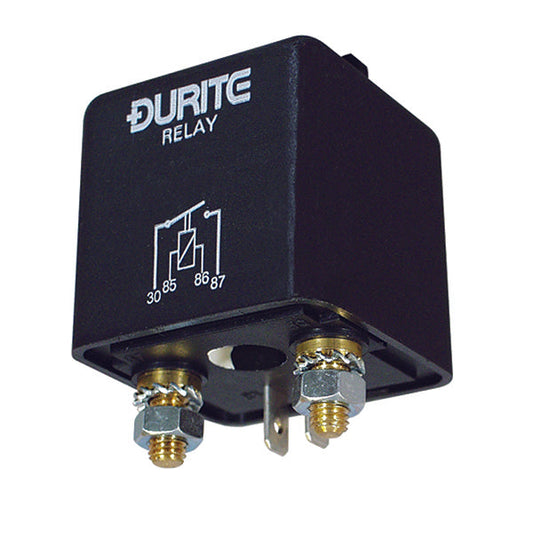
The relay range at Truckstop covers the main types used in commercial vehicle auto-electrical installations. Durite micro relays are available in make/break and changeover configurations at 12V, with diode suppression options. Mini relays cover make/break and changeover types in 12V and 24V, from 10/20A to 40A ratings, with sealed, diode-suppressed and resistor-suppressed variants. Heavy-duty relays run from 60A (24V changeover) to 200A (12V make/break), suited to main power switching applications. The DT Spare Parts battery main relay covers specific truck applications.
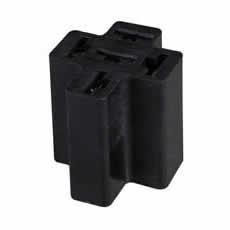
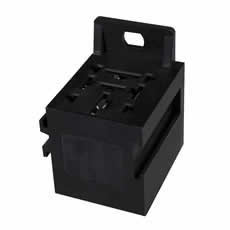
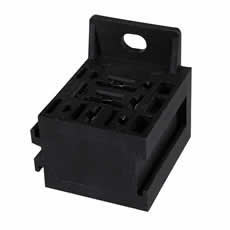
Relay sockets and bases are stocked for each relay type: bulkhead socket for micro relays, bulkhead socket for mini relays, bulkhead socket for heavy-duty relays and controllers, and a flying socket for flasher units and relays. Matching the socket to the relay type is essential as pin configurations differ.
When selecting a relay, confirm the voltage (12V or 24V), the switching type (make/break or changeover), the current rating and whether diode or resistor suppression is needed for the specific circuit. Diode-suppressed relays are used where back-EMF protection is required at the coil.
Frequently asked questions
What is the difference between a make/break and changeover relay?
A make/break relay has two switching states: open (off) and closed (on). A changeover relay has three terminals on the switch side: common, normally open and normally closed. It can switch between two separate circuits rather than just completing or breaking one. Use a changeover relay where two outputs need to be controlled by a single relay coil.
What does relay diode suppression do?
When the relay coil is de-energised, the collapsing magnetic field generates a voltage spike (back-EMF). A diode across the coil absorbs this spike, protecting other components in the circuit such as switches or ECUs. Diode-suppressed relays should be used in any circuit that switches sensitive electronics.
How do I choose the right current rating for a relay?
The relay's rated current must be equal to or greater than the maximum continuous current of the load being switched. For resistive loads, match the rating to the load current. For inductive loads such as motors or solenoids, use a relay rated at least 25% above the running current to handle the inrush.
Do I need a matching relay socket?
Relay sockets are application-specific: micro, mini and heavy-duty relays all use different pin configurations and are not interchangeable. Bulkhead sockets allow permanent mounting; flying sockets are used for temporary or accessible locations. Sockets for each relay type are stocked alongside the relays.
Can I get relays delivered next day?
Yes. In-stock relays and sockets are available for next-day delivery to UK mainland addresses, or same-day collection from our branches in Redditch, Worcester, Birmingham and Evesham.


 Sold out