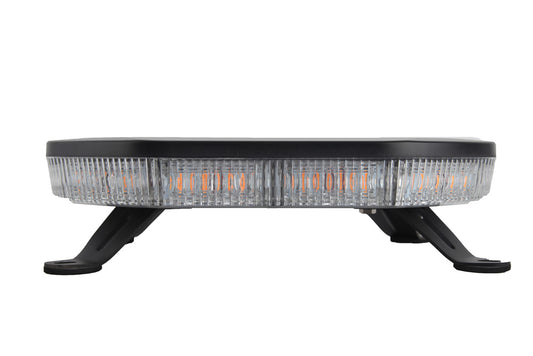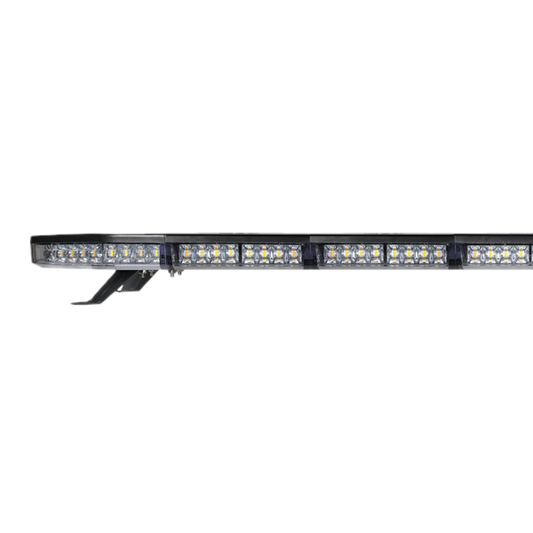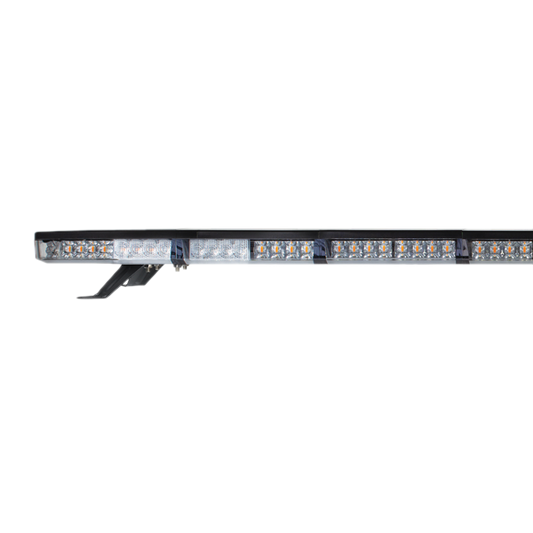


LED light bars have become a popular upgrade for vehicles, offering a cost-effective way to achieve powerful, efficient illumination. Compared to older halogen technology, they deliver brighter light with lower energy use, improving safety, visibility, and confidence when driving off-road, working at night, or navigating unlit roads.
However, the fastest way to waste money on a light bar is to buy “more lumens” without understanding what those numbers actually mean, then fail an MOT, blind oncoming traffic, or end up with a fogged‑up bar after the first jet wash.
In this article, we’ll cover everything you need to know about LED light bars, which specs actually matter, and how to stay on the right side of UK road law.
LED light bar basics
LED light bars outperform traditional headlights because they are engineered as complete optical and electronic systems rather than a bulb-and-reflector compromise.
Standard headlights are constrained by strict beam cut-offs, housing depth, and regulatory geometry. Light bars can be designed specifically for distance, width, or task lighting, allowing engineers to prioritise luminous intensity where it is most useful.
Understanding LED light bar specifications is the difference between buying a light that looks impressive on paper and one that actually performs in the real world.
Lumens vs. Lux
Lumens measure the total amount of visible light emitted by a source. They tell you how much light is produced overall, but not where that light goes. A high-lumen light bar with poor optics can scatter light inefficiently, creating glare and bright foreground illumination while failing to light the distance ahead.
Lux measures light intensity on a surface at a given distance. It determines how much light reaches the road, trail, or work area where you need it. A bar with lower total lumens but higher lux at distance will often outperform a high-lumen bar with weak beam control.
The table below should give you an idea of what lumen range you should look out for:
|
Use case |
Typical effective lumen range |
Recommended beam pattern |
Mounting notes |
|
HGV road use (aux main beam) |
~2,000–5,000 lm |
Spot or narrow combo |
Mount low and aim with main beam to avoid glare |
|
Rural / unlit roads |
~4,000–8,000 lm |
Combo |
Aim for long throw without excessive foreground spill |
|
Off‑road trails / green lanes |
~6,000–12,000 lm |
Combo or flood‑biased combo |
Higher mounting acceptable off‑road |
|
Work / recovery scene lighting |
~2,000–6,000 lm |
Flood |
Mount to minimise shadows and reflections |
Watts
Watts measure electrical power consumption, not brightness. With older halogen lights, higher wattage generally meant more light because efficiency was low and predictable.
LEDs changed that equation. Modern LED chips can produce far more light per watt than halogens, meaning a well-designed 60-watt LED bar can outperform a poorly designed 120-watt one.
Watts are still critical, but for a different reason. They determine whether your vehicle’s electrical system can safely support the light. Power draw affects wiring size, fuse ratings, relay choice, and alternator load.
Amp draw
Amp draw is calculated by dividing watts by system voltage (amps = watts ÷ volts).
This calculation is essential for safe installation. A 120-watt light bar draws roughly 10 amps on a 12-volt system and around 5 amps on a 24-volt system. Exceeding what your wiring or fuse can handle risks voltage drop, overheating, and premature component failure.
In short, lumens sell lights, but lux, watts, and amperage determine whether they actually work on your vehicle.

Shop Durite Light Bars ➔
Choosing the right beam pattern
Beam pattern is one of the most important (and misunderstood) aspects of LED light bar performance. Two light bars with identical outputs can behave very differently depending on how the light is shaped and directed. The right beam pattern depends entirely on how and where you drive.
Spot beams
Spot beams produce a narrow, concentrated cone of light, often described as a pencil beam. Their primary purpose is long-distance visibility. By focusing light into a tight pattern, spot beams achieve high light intensity at distance, making them ideal for high-speed driving on unlit roads or open off-road terrain.
This type of beam is especially useful when reaction time matters. Seeing further ahead allows drivers to identify hazards such as wildlife, bends, or obstacles earlier, increasing safety at speed.
However, the narrow spread means limited peripheral visibility, which can be a drawback on technical trails or in confined environments.
Flood beams
Flood beams spread light across a wide angle, typically up to 90 degrees. Instead of throwing light far downrange, they prioritise illuminating the immediate area around the vehicle. This makes them well suited to slow-moving off-road driving, work sites, recovery operations, and loading areas.
The wide spread reduces harsh shadows and improves situational awareness at low speeds.
The trade-off is distance. Flood beams do not project light far ahead, which makes them unsuitable for fast road or trail driving where forward visibility is critical.
Combo beams
Combo beams combine spot and flood optics within the same light bar. Typically, spot optics are positioned in the centre to provide distance, while flood optics sit at the outer edges to light up the sides.
This hybrid approach has made combo beams the most popular choice for mixed-use vehicles, providing a balanced solution for drivers who need both forward reach and peripheral visibility without running multiple separate lights.
For most 4x4s, pickups, and commercial vehicles, a well-designed combo beam offers the best all-round performance.
Driving beams
Driving beams are specifically shaped to supplement factory high beams for road use. Instead of a round or conical pattern, they produce a rectangular beam designed to project light onto the road surface while minimising glare to oncoming traffic.
When approved for on-road use, driving beams integrate with high-beam circuits and follow strict photometric requirements. They are ideal for drivers who want improved night-time visibility on public roads without stepping outside legal boundaries.
Choosing the right beam pattern is less about brightness and more about putting light exactly where your eyes need it, and nowhere else.
Lens colours and conditions
Lens colour plays a big role in how an LED light bar performs in different environments. While brightness often gets the most attention, colour temperature and wavelength have a direct impact on contrast, glare, and visual comfort.
White light
White light is the standard choice for most LED light bars, delivering maximum overall brightness and offers the most natural colour rendering, making it well suited to general driving and off-road use.
In clear conditions, white light provides strong detail recognition and long-range visibility, which is why it dominates both road and off-road lighting.
However, white light contains a broad spectrum of wavelengths, including shorter wavelengths that are more prone to scattering. In rain, fog, or snow, this scattering can increase glare and reduce contrast, making it harder to distinguish terrain features or obstacles at distance.
Amber and yellow light
Amber and yellow lenses are specifically valued in poor visibility conditions.
Their longer wavelengths scatter less when they encounter water droplets, dust, or snow particles, resulting in reduced back-glare and improved contrast. This is why amber lighting has long been used in fog lamps and industrial environments.
In off-road situations such as dusty trails, desert driving, or snowy terrain, amber light can improve depth perception and reduce eye strain.
While amber light does not appear as bright as white light, the improved contrast often results in better usable visibility when conditions deteriorate.
Emergency colours
LED light bars are also available in red, blue, and green configurations, primarily for emergency and specialist vehicles. These colours are designed for conspicuity rather than illumination and are tightly regulated in the UK.
Red and blue lights are typically restricted to authorised emergency services, while amber is commonly permitted for recovery vehicles, road maintenance, and slow-moving or hazardous operations. Using these colours on public roads without proper authorisation can result in fines or vehicle enforcement action.
When choosing lens colour, the key consideration is not aesthetics, but how the light interacts with the environment you drive in most often.

Shop Lazer Lamps Guardian Light Bars ➔
Size, shape, and mounting
The physical design of an LED light bar is not just an aesthetic choice. Size, shape, and mounting position all influence beam performance, glare, durability, and how effectively the light integrates with the vehicle.
Bar shapes
Straight light bars are the most common design and are available in a wide range of lengths, from compact 6-inch units to bars exceeding 50 inches. Their uniform shape makes them easy to mount on bumpers, roof racks, and bull bars. Straight bars project light directly forward and are ideal where clean, predictable beam alignment is required.
Curved light bars are designed to follow the contour of a vehicle’s bumper or windscreen line. By angling the outer sections slightly outward, curved bars can provide a wider spread of peripheral light without increasing overall width.
This can improve side illumination on trails or country roads, though the effect depends heavily on optic quality rather than shape alone.
Single or double rows
Single-row light bars use one line of LEDs and have a slimmer profile. They are lighter, more aerodynamic, and easier to integrate into grilles or behind trims.
While modern single-row bars can still deliver excellent output, their compact size limits how much thermal mass and optic depth can be built in.
Double-row light bars stack LEDs vertically, increasing output potential and allowing for more complex optic designs. However, double-row bars are bulkier and more visually prominent, which can limit mounting options or affect airflow.
Mounting locations
Where a light bar is mounted matters as much as which bar you choose.
Bumper and grille mounts position the light closer to the road surface. This reduces glare, improves beam control, and minimises reflection off the bonnet or bodywork. For road and mixed-use vehicles, lower mounting generally delivers the most usable light.
Roof-mounted bars offer height and reach, which can be beneficial off-road. However, they also increase glare and often cause light to reflect back onto the bonnet, especially in wet conditions. For this reason, roof bars are best reserved for off-road use.
A-pillar or “ditch lights” are commonly used to illuminate the sides of trails or work areas. They complement forward-facing bars rather than replacing them.
A well-chosen light bar paired with sensible mounting will outperform a larger, brighter bar installed in the wrong place.
What to look for when buying a light bar
At first glance, many LED light bars look interchangeable.
Aluminium housings, rows of LEDs, and aggressive performance claims can make budget and premium options appear similar. The real differences only become apparent when you examine the internal components and how they are engineered to work together over time.
Here then are the things you need to look out for before purchasing a light bar:
The LED diode (chip)
The LED chip is the foundation of a light bar’s performance and longevity.
Premium manufacturers typically use diodes from established suppliers such as Cree, Osram, or Philips, which are known for consistent output, tight binning tolerances, and predictable thermal behaviour. These chips deliver stable light output across their lifespan and are backed by extensive reliability data.
Cheaper light bars often use generic or loosely specified chips. While these can produce impressive brightness when new, they are often less efficient and far more sensitive to heat. LED output degrades rapidly as junction temperature rises, and inconsistent chip quality accelerates lumen depreciation and colour shift under sustained use.
Optics and reflectors
Optical design is one of the most significant performance differentiators. Budget bars typically rely on simple conical reflectors that allow light to scatter in many directions. This creates bright foreground illumination but wastes light and increases glare, reducing effective seeing distance.
Premium light bars use more sophisticated optical systems. These are generally projector-style lenses that shape and focus light with much greater precision. By controlling luminous intensity distribution, these optics increase usable lux at distance and improve side coverage without increasing total output.
Some advanced designs also incorporate hooded or shielded reflectors, which block upward spill. This prevents light being wasted into treetops or reflecting back into the driver’s eyes, a principle borrowed from professional roadway and industrial lighting design.
Durability
Ingress protection is critical for lights exposed to rain, mud, and road spray.
An IP67 rating indicates protection against dust and temporary immersion, while IP68 offers resistance to prolonged water exposure.
Lens quality also varies. Most light bars use polycarbonate lenses for impact resistance, but lower-grade plastics can yellow or haze due to UV exposure. Premium units apply UV-resistant coatings or use higher-grade materials to maintain optical clarity over time.
Heat management
Heat is the primary enemy of LED longevity. Premium light bars incorporate substantial heat sinks, well-designed thermal pathways, and sometimes thermal monitoring that reduces output if temperatures exceed safe limits.
Driver electronics further separate quality levels. Regulated constant-current drivers protect LEDs from voltage fluctuations and electrical noise. Poorly regulated drivers increase flicker, EMI, and long-term component stress, particularly in commercial vehicles with variable electrical loads.
The table below outlines the main differences between budget and premium light bars:
|
Factor |
Budget light bars |
Premium light bars |
|
Typical price |
Low upfront cost |
Higher initial investment |
|
True light output |
Often based on theoretical LED chip ratings rather than measured output |
Based on tested photometric data (candela, beam distance, effective lumens) |
|
Optics |
Basic reflectors or lenses with poor beam control |
Precision-engineered optics that control luminous intensity distribution |
|
Ingress protection (IP) |
Claimed ratings may not reflect real-world sealing quality |
Verified IP67–IP69K designs with controlled venting |
|
Lens quality & UV resistance |
Standard polycarbonate with limited UV stabilisation |
UV-stabilised polycarbonate or equivalent materials |
|
Mounting brackets |
Thin steel or aluminium prone to vibration fatigue |
Heavy-duty brackets designed for sustained vibration |
|
EMI/EMC suppression |
Minimal filtering; can interfere with radios |
Regulated drivers with EMC compliance |
|
Voltage range |
Often limited to narrow 12V input |
Wide input ranges (commonly 9–32V) |
|
Warranty & support |
Short warranties, limited aftersales support |
Longer warranties backed by established suppliers |
The performance differences above are consistent with established principles in optical engineering, power electronics, and materials durability.

Shop Hella Light Bars ➔
The legal considerations of using a light bar
LED light bar use in the UK is governed by the Road Vehicles Lighting Regulations (RVLR), supported by UNECE regulations that define approval, installation, and operation standards. The law regulates how a light is used, not simply whether it is fitted:
-
UNECE R48 - Installation of lighting and light-signalling devices
-
UNECE R112 - Headlamps and auxiliary driving beams
-
UNECE R19 - Front fog lamps
-
UNECE R10 - Electromagnetic compatibility
Together, these regulations establish four core legality criteria:
-
Colour - what colour light is permitted and where
-
Approval - whether the lamp is type-approved (E-marked)
-
Function - how the light operates relative to other vehicle lights
-
Use - when the light may be illuminated on public roads
Auxiliary driving light bars
A small number of LED light bars are designed to function as auxiliary driving lamps. When E-marked and installed correctly, these may be used legally on public roads provided that:
-
They emit white light only
-
They operate only with main beam
-
They extinguish automatically when dipped beam is selected
-
They are aimed to avoid glare to oncoming traffic
If a light bar does not meet these conditions, it may still be physically fitted but must not be illuminated on public roads.
Work lights and flood bars
Flood-pattern LED light bars and work lights are not road legal for driving, as they exceed permitted beam spread and intensity limits. However:
-
They may be used off-road
-
They may be used when stationary for work purposes
-
They must not be illuminated while the vehicle is in motion on public highways
Roof-mounted light bars
Roof-mounted LED light bars are almost always restricted to off-road use. Their height and beam angle make it difficult to comply with glare and beam control requirements under UNECE R48, particularly in wet or reflective conditions.
Colour restrictions
UK colour rules are strict:
-
White - permitted at the front (subject to approval)
-
Selective yellow / amber - permitted for fog lamps and warning beacons
-
Red - rear-facing only
-
Blue - emergency services only
Unauthorised use of blue, red, or green forward-facing lights on public roads is illegal and may result in enforcement action.
Given the complexities around light bar usage, the table below should help clear things up:
|
Light bar type |
Position |
Colour |
Legal on public roads? |
Conditions |
|
Auxiliary driving light bar (E-marked) |
Front (bumper/grille) |
White |
Yes |
Must operate with main beam, E-marked, and correctly aimed |
|
Auxiliary driving light bar (non-approved) |
Front |
White |
No |
May be fitted but not used on public roads |
|
Flood / work light bar |
Front / side / rear |
White |
No |
Off-road or stationary work use only |
|
Fog-style LED bar (approved) |
Front |
White or selective yellow |
Limited |
Must comply with UNECE R19 |
|
Roof-mounted LED light bar |
Roof |
White |
No |
Off-road use only due to glare risk |
|
Amber warning light bar |
Roof |
Amber |
Yes |
Authorised uses only (recovery, highway maintenance) |
|
Red / blue emergency bar |
Roof |
Red / blue |
Restricted |
Emergency services only |

Frequently asked questions
If you’ve still got questions about light bars, we’ve put together a list of the most commonly asked questions to clear things up:
What should I look for when buying a light bar?
Start with beam pattern and optics, not lumen numbers. Beam distribution determines where light actually goes, which matters more for visibility than total output.
Next, check effective lumens, colour temperature, IP rating, and electrical compatibility (12V/24V). This prioritisation mirrors professional lighting design practice, where luminous intensity distribution is considered before total flux.
Which is better, 4300K or 6000K LED?
For most UK driving, 4300K–5000K offers better contrast, comfort, and performance in rain and fog. 6000K can appear sharper in clear conditions but contains more short-wavelength light, which increases scatter in poor weather.
What is the most common problem with LED light bars?
The most common issues are moisture-related failures, electrical flicker, and radio interference. Moisture problems stem from seal failure or blocked breather vents, while flicker is usually caused by voltage drop or poor grounding. Premium light bars and correct installation should help to mitigate most of these issues.
Are 6000K headlights legal in the UK?
Yes, provided the light emits white light, is type-approved, and is installed and used correctly. UK legality depends on compliance with UNECE regulations adopted into UK law, not colour temperature alone. Lamps must carry appropriate approval markings.
How many lumens are ideal for a light bar?
There is no single ideal number. Road use typically benefits from 2,000–5,000 effective lumens, while off-road and work applications may require more. Beyond a certain point, additional lumens increase glare rather than usable seeing distance. Road-lighting research shows diminishing returns beyond optimal luminance levels.
How many watts is a good LED light bar?
Watts indicate power consumption, not brightness. A “good” wattage is one your vehicle’s electrical system can safely support. At 12V, a 120W bar draws around 10A; at 24V, roughly 5A.
What IP rating do I need for UK weather and jet washing?
For UK conditions, IP67 is the minimum recommended rating. IP68 offers better long-term protection, while IP69K is preferable for vehicles that are regularly pressure-washed. These ratings are defined by IEC 60529.
Can an LED light bar drain my battery?
An LED light bar will not drain a healthy battery when wired correctly and used with the engine running. Problems arise when lights are operated for extended periods with the engine off.
Find the best LED light bars at Truckstop Group
Choosing the right LED light bar isn’t about buying the brightest option you can afford. It’s about understanding how light behaves, how your vehicle is used, and where performance, comfort, and legality intersect.
At Truckstop Group, we stock a wide range of quality light bars from the leading brands, including Durite, Guardian Automotive, Hella, and Lazer Lamps.
Contact our team today to see how we can help.
Shop LED light bars today
Find more insights, news, and information in the truck industry at our Truckstop Group News Page.
Five HGV Parts You Need to Know About Before They Fail | The Future of the UK Truck Driver: 5 Big Shifts We Can See Today | UK Truck Safety Technology In 2026: What You Need To Know